
Congress's Jairam Ramesh opposes SEBI plan to scrap FPI ownership disclosure rules
Ramesh said the proposal would reopen a loophole closed after the January 2023 allegations against the Adani Group and should be withdrawn.
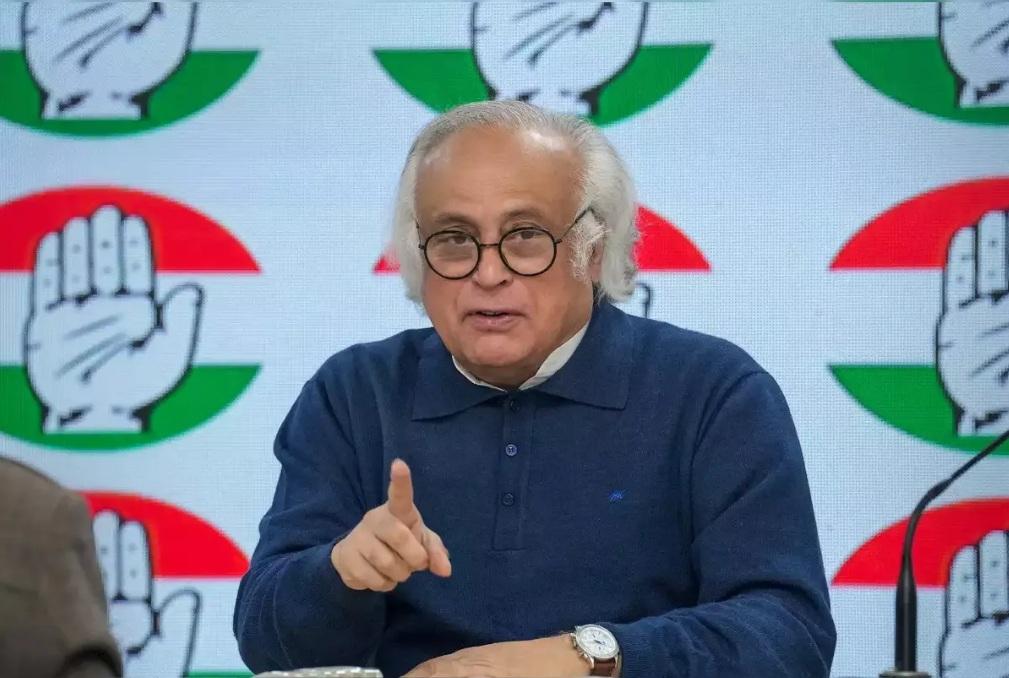
Congress leader Jairam Ramesh has criticised a SEBI consultation paper that proposes to scrap disclosure rules for foreign portfolio investors (FPIs) introduced in August 2023, saying the move would reopen a loophole that allows opaque offshore money into Indian companies. He made the remarks in a statement posted on X.
Ramesh said the proposal came soon after the Prime Minister addressed industry leaders at FICCI on November 19, 2026. He alleged that the government had "little hope of reviving domestic private investment, or even FDI" and was instead courting foreign portfolio investors to keep stock markets buoyant "even at the cost of market integrity."
Rules framed after 2023 allegations
According to the statement, the rules were brought in after allegations in January 2023 that the Adani Group had used overseas funds and shell companies to build up stakes in its own listed companies. Ramesh said that after the Supreme Court's Expert Committee found SEBI could not identify who stood behind these funds, the SEBI Board on June 28, 2023 approved new disclosure requirements to prevent "circumvention of regulations such as the requirement for Minimum Public Shareholding."
From August 2023, FPIs holding more than 50% of their Indian equity investments in a single corporate group had to provide full look-through disclosures of ultimate ownership, economic interest and control.
Ramesh cited SEBI's final order of September 2026 in the minimum public shareholding case, which, he said, held that "the material on record does not establish" that Vinod Adani controlled the funds concerned, while conceding that the circumstances "may legitimately give rise to suspicion warranting further examination." He argued that the lack of full disclosure rules was what made it hard for SEBI to establish control.
Justification questioned
The Congress leader said SEBI's consultation paper describes the safeguards as having "practically become an entry barrier" for foreign investors. He disputed that scrapping them would bring back foreign flows, noting that sovereign wealth funds, pension funds, broad-based regulated funds and government-linked investors were already exempt.
He questioned how removing rules that applied to a narrow subset of funds could reverse the ₹5.61 lakh crore he said FPIs had withdrawn from Indian equities over the past two years, adding that SEBI's own paper acknowledges other causes for the outflows.
"India definitely needs foreign investors but not those with opaque and convoluted offshore ownership structures. Ease of doing business cannot come at the cost of capital market integrity," Ramesh said.
He called for the proposals to be withdrawn.