
Alleys of Mapusa: The underbelly of crime
A disillusioned Mapshekar on the dilapidated buildings, abandoned alleys and official apathy that let evil fester in Goa's once-proud market town
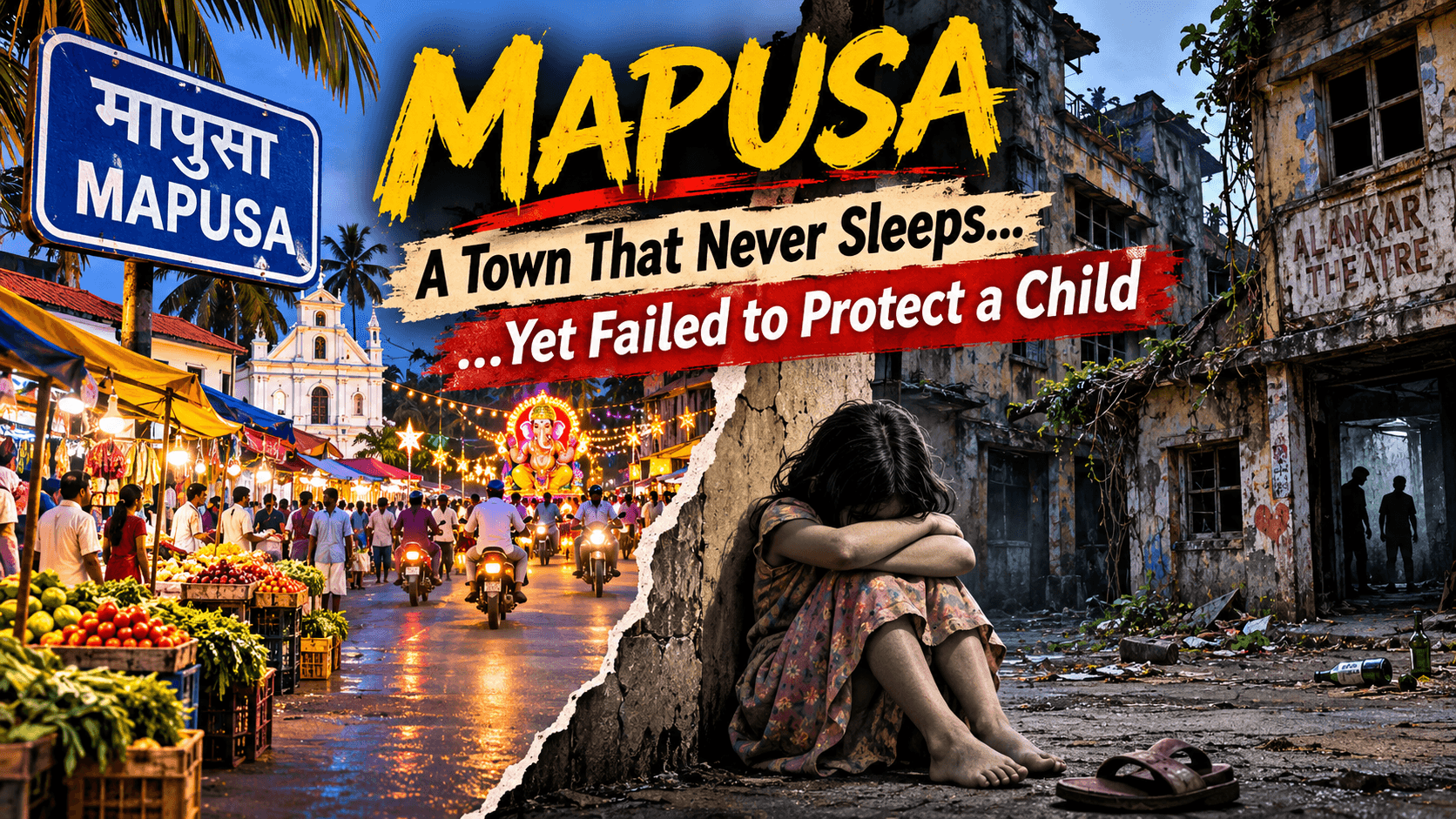
Mapusa is a living town with its enthusiastic Mapshekars. Our market is the biggest business hub in Bardez for vegetables, fruits, flesh of all types, spices, consumables, utensils and fabric. Transactions worth billions happen here every single day.
Nobody sleeps in Mapusa during the eve and night of Ganesha, Dahi Handi, Narkasur, Diwali and Christmas — and the cricket and football World Cups. Taking bikes and cars out and roaming all over the place is an age-old Mapshekar tradition, kept alive by generations.
So how, in a town this awake, can a child be raped in the very heart of Mapusa during festival season — and the perpetrator vanish undetected?
The answer lies here.
Most of the multi-floor commercial buildings in the heart of Mapusa are age-old, constructed either during the fag end of the Portuguese era or just after Liberation. Vaishya Bhuvan (which houses the State Bank of India in Feira Baixa) and Sirsat Lodge, opposite the taxi stand, are two examples.
Not those two — but many buildings adjacent to them are heavily populated only up to the ground floor, where shops are leased to local vendors. The upper floors of such buildings are so dilapidated and crumbling that nobody ever ventures into them.
And then there are entirely abandoned buildings — in Khorli, Morod, Taliwada, Ansabhat, Vitthalwadi, Dattawadi and Feira Baixa — that no one lives in at all. These haunted structures are either stuck in ownership litigation, or their original owners are long dead and their descendants settled abroad. The Alankar theatre building is one obvious example.
These shells of buildings do double duty. They are temporary shelters for beggars, street people, destitutes, sex workers, urchins, and the drug-degenerated. Or they are homes for owls, bats, pigeons, crows and cats — with their droppings scattered everywhere.
The alleys leading to these ghost buildings are visited by Mapusa's own people for exactly one purpose: to urinate when the empty beer bottles at the nearby booze joints exceed limits and nature's call becomes irresistible.
These are the hideouts where cheap ganja and crack cocaine pouches exchange hands with money. These are the hideouts where sex workers crack deals with their poorest clients. These are the places where beggars sleep at night. And now — if the whispers emerging from Mapusa this week hold — these are also the hideouts where a child was raped by demons masquerading as human beings.
Shame on the Mapusa MLA, who never noticed this urban blight.
Shame on the Mapusa police beat constables, who never ventured inside these crime dens.
Shame on the Goa government, whose claims of curbing drugs, illicit alcohol and prostitution now ring hollow in the alleys of Mapusa.
And above all — shame on us, the Mapusa residents, who never raised our voice for this cancerous tumour growing in the heart of our own town.
This is our collective failure. This is the funeral bell of Mapusa — once the jewel of Bardez, and now, Goa's biggest urban slum.
— A disillusioned Mapshekar